Lewis Hine's Most Famous Photographs
Lewis Hine (1874-1940) was a sociology-trained schoolteacher who became the investigative photographer of the National Child Labor Committee in 1908. Over the next sixteen years he crossed the country with a heavy view camera and a notebook, photographing children in cotton mills, coal breakers, glass factories, canneries and city streets, and writing down their names, ages, addresses and wages. The Committee used the pictures in its reports, pamphlets, exhibits and lantern-slide talks to press for child labor laws.
The photographs below are the ones from this archive that people still look for by subject: the breaker boys of the Pennsylvania coal fields, the newsboys or newsies of New York and St. Louis, the boys climbing a spinning frame in Macon, Georgia, a little girl in a South Carolina spinning room, and the boys on the night shift of a New Jersey glass works. Each page explains how the picture was made, what Hine wrote about it, why it mattered, and exactly which print or frame this archive holds. Some of Hine's best-known images, including his Ellis Island and Empire State Building pictures and the portrait of Sadie Pfeifer, are not part of this collection and are not covered here.
-
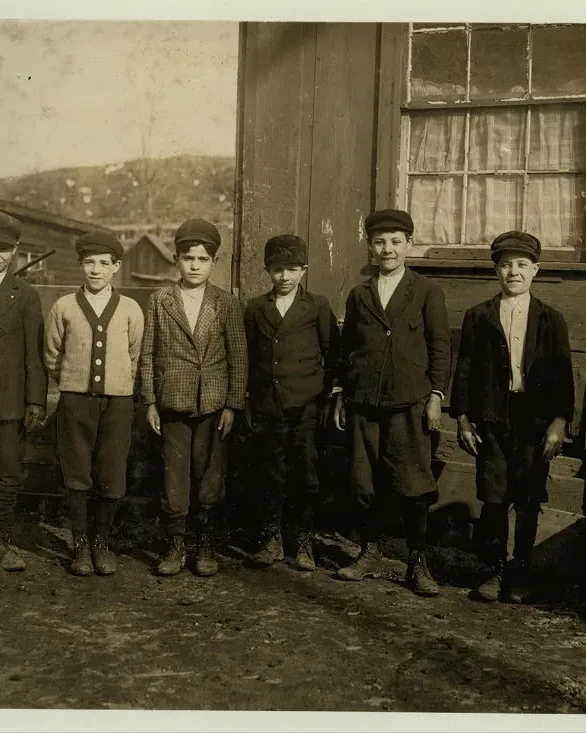
Breaker Boys, Pittston, Pennsylvania (1911)
In January 1911 Lewis Hine photographed boys who worked as breaker boys at the Ewen Breaker of the Pennsylvania Coal Company near Pittston, Pennsylvania. This group portrait, made on a street outside the breaker, names each boy and records Hine's doubts about the ages they gave him. It belongs to the same visit as his famous pictures of boys bent over the coal chutes inside the breaker, and his caption cards link the two.
The story behind it → -
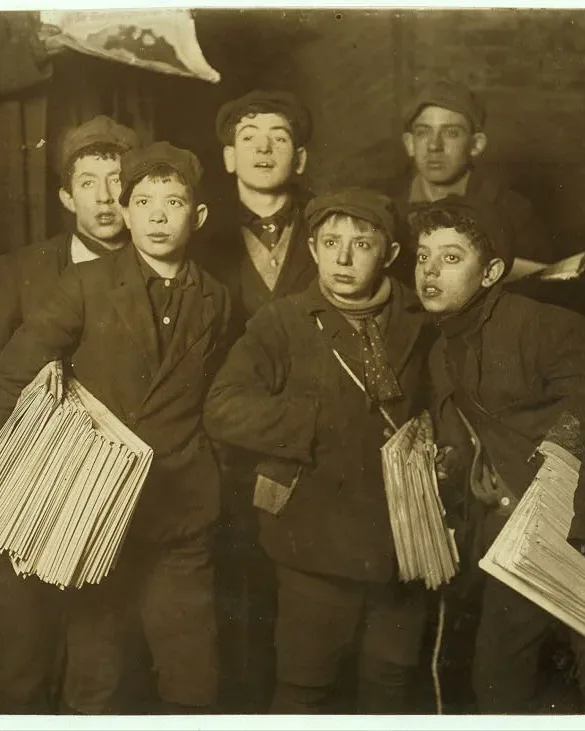
Newsboys (Newsies) (1908-1910)
Newsboys, or newsies, were the most visible child workers in American cities, and Lewis Hine photographed hundreds of them for the National Child Labor Committee. This page covers the series as a whole, led by his February 1908 group portrait of newsboys on Frankfort Street beside the New York World building, and including the very young newsies he photographed in St. Louis in May 1910.
The story behind it → -
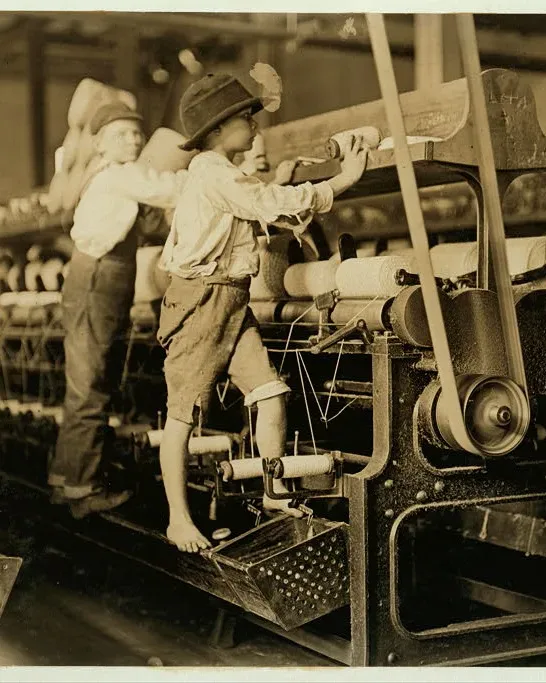
Boys on the Spinning Frame, Bibb Mill No. 1, Macon, Georgia (1909)
On January 19, 1909, Lewis Hine photographed two boys climbing onto a spinning frame in Bibb Mill No. 1 in Macon, Georgia. His caption explains that some boys were so small they had to climb up on the machine to mend broken threads and replace empty bobbins. The barefoot boy balanced on the frame became one of the most widely reproduced images of child labor in the American South.
The story behind it → -
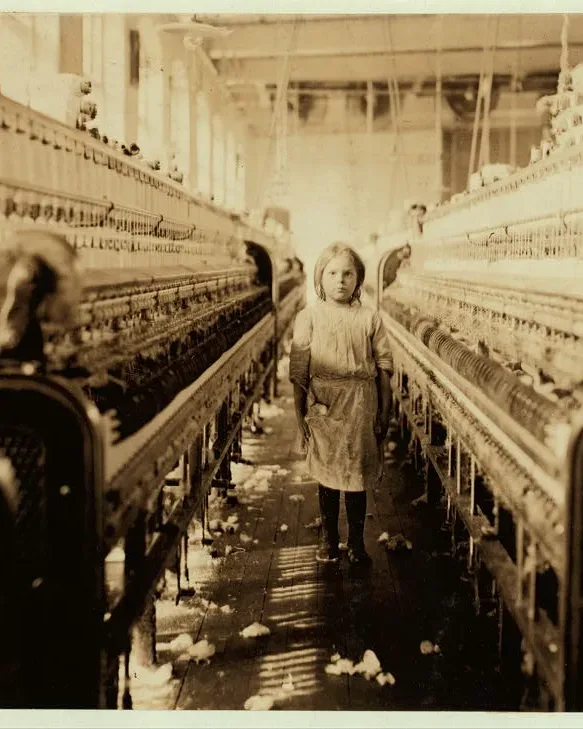
A Little Spinner in the Mollahan Mills, Newberry, South Carolina (1908)
On December 3, 1908, Lewis Hine photographed a small girl standing in the aisle between two long spinning frames at the Mollahan Mills in Newberry, South Carolina. His caption records the overseer's excuse that she had just happened in. The picture, with its long perspective of machinery closing in on a single child, is among the best known of Hine's Southern mill photographs.
The story behind it → -
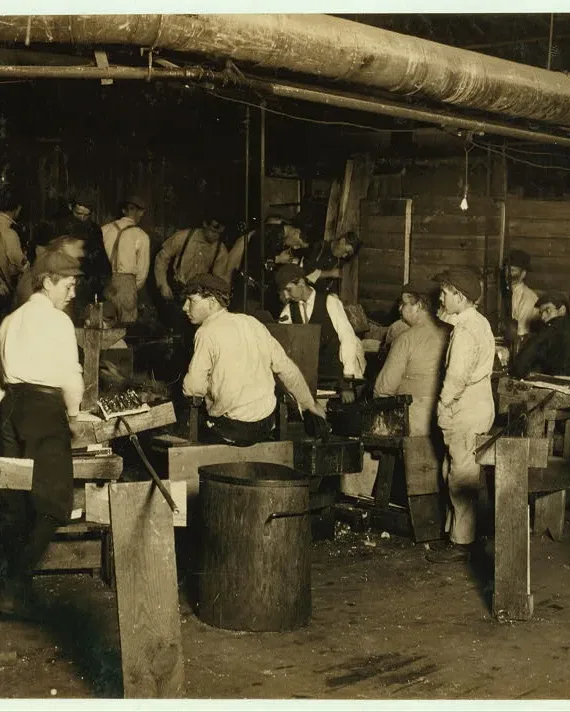
A Midnight Scene in the Glass Works, Bridgeton, New Jersey (1909)
In November 1909 Lewis Hine photographed the night shift in two glass factories in Bridgeton, New Jersey, where boys worked alongside the glassblowers. This page covers that series, led by his midnight scene in the More-Jones glass works, in which a small snapper-up boy stands among the men at the benches.
The story behind it →